| |
|
|
| Theater |
|
Uncle Vanya
by Anton Chekhov
Translated by Carol Rocamora
Â
Directed by Austin Pendleton
Classic Stage Company, New York, January 17, 2009âMarch 8, 2009
Â
Marina â Cyrilla Baer
Astrov â Peter Sarsgaard
Vanya â Denis OâHare
Serebryakov â George Morfogen
Telegin â Louis Zorich
Sonya â Mamie Gummer
Yelena â Maggie Gyllenhaal
Voynitskaya â Delphi Harrington
Watchman â Andrew Garman
|
| Ilya Khodosh |
March 8, 2009 |
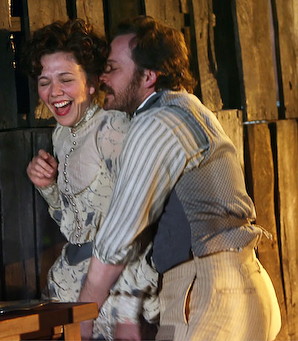
Uncle Vanya is the most intimate of the Chekhov plays, and it has always been my favorite. It is a character study of great power and fragility. I often hear it referred to as a philosophical play thematically about the âsuperfluous manâ or the âwasted life.â But at its essence, Uncle Vanya is very simply about passionate, banal, stubborn, miserable people reaching out, drinking, whispering to one another in the dark, coping with the vagaries and indignities of their feral loneliness, thrashing against their limitations and always coming up short. The current production at Classic Stage Companyâdirected by Austin Pendleton, who must have played the eponymous character in past productions more often than any other American actorâbrushes the surface of this playâs potential to move, devastate, and engage. Itâs a refined production, but one that keeps the charactersâ emotions at armâs length and only suggests their capacity for suffering and self-destruction. It offers some stirring moments and a comfortable, unforced contemporary feel, but it never reaches the fully agonizing intensity and humanity of these emotions.  |
|
|
The Winter's Tale
by William Shakespeare
A Bridge Project production at BAM, directed by Sam Mendes
Simon Russell Beale - Leontes, King of Sicily
Michael Braun - Dion, Lord of Sicilia/Florizel
Morven Christie - Perdita/Mamillius
Sinéad Cusack - Paulina, wife to Antigonus
Richard Easton - Old Shepherd/Time
Rebecca Hall - Hermione
Josh Hamilton - Polixenes, King of Bohemia
Ethan Hawke - Autolycus
|
| Michael Miller |
March 16, 2009 |
| I had to wait impatiently until the final day of The Winter's Tale to see it. After my eager anticipation, was it my fantasy that a good part of the audience had seen it once or twice before and were coming to bid this magical, but imperfect production a fond farewell. My imagination was probably only exaggerating, but there were probably enough recidivists there to create the atmosphere I sensed. There was something else, however. Especially before the break, there was a striking amount of laughter in the wrong placesâat moments in which some of the best actors in the business under Sam Mendes' supremely imaginative and skilled direction, were most definitely not playing it for laughs. Did this arise from the warmth of prior experienceâsomething akin to the way Brattle Theatre audiences used to shout out Humphrey Bogart's lines in Casablanca? Probably not. It most likely emerged from the inevitable disjuncture between mentalities of 2009 New York and Blackfriars c. 1611. |
|
|
Lloyd George Knew My Father
by William Douglas Home
with Edward Fox and Helen Ryan
King's Theatre, Edinburgh, February 16-21, 2009
|
| Lucas Miller |
March 16, 2009 |
|
Lloyd George knew my father,
Father knew Lloyd George!*
It is from these catchy, obviously profound lines (to be repeated continually, or until the singer just gets bored) that William Douglas Homeâs Lloyd George Knew My Father (1972) takes its title. The revival of this play, by Theatre Royal Bath Productions, is an interesting one. It allows for the resurfacing of not just a good play, but an important personage â no, not Lloyd George, who is covered enough by tedious school text books and biographers, but rather, William Douglas Home. Indeed, the programme accompanying the performance focuses far more on the playwright than the play. It portrays Home as âquintessentially English,â an aristocrat.
|
|
|
The Cherry Orchard
by Anton Chekhov
A new version of the play by Tom Stoppard
Â
Directed by Sam Mendes
The Bridge Project, a Co-production of BAM, The Old Vic, and Neal Street Productions
Harvey Theater, Brooklyn Academy of Music, New York, January 2, 2009âMarch 8, 2009
Â
Ranevskaya â Sinéad Cusack
Anya â Morven Christie
Varya â Rebecca Hall
Gayev â Paul Jesson
Lopakhin â Simon Russell Beale
Trofimov â Ethan Hawke
Simeonov-Pishchik â Dakin Matthews
Charlotta Ivanovna â Selina Cadell
Yepikhodov â Tobias Segal
Dunyasha â Charlotte Parry
Firs â Richard Easton
Yasha â Josh Hamilton
|
| Ilya Khodosh |
February 10, 2009 |
| I'm not quite sure why I went to the new production of Chekhov's The Cherry Orchard at BAM expecting to mourn and sympathize with passionate, anxiety-ridden, suffering ordinary people whose every disappointment reminds them of their personal failures and limitations. Instead, in this production with a distinguished British and American cast directed by Sam Mendes, I found an absurdly dysfunctional bunch of freaks and imbeciles who operate under so many layers of delusion that empathy becomes near-impossible. Their emotional lives teeter in some nether-world between melodrama and farce, and their relationship with actual reality is so long-distance that one can't help but react with more contempt than pity. At the same time, they inhabit a play about class, the transfer of power, historical forces of change, and the housing market. This Cherry Orchard is so stunningly, breathtakingly topical that to see it develop towards its dramatic climax is to lose oneself in Chekhov, making this production an essential revival. |
|
|
Tons of Money
by Will Evans, Valentine Evans, and Will Valentine, adapted by Alan Ayckbourn
Kingâs Theatre, Edinburgh
directed by Joe Harmston
designed by Simon Scullion
Cast:
Louise - Caroline Langrishe
Mark Curry - Aubrey
Sprules - Christopher Timothy
Simpson - Finty Williams
âHeneryâ - Eric Carte
Giles - Keith Clifford
Miss Mullet - Janet Henfrey
Jean - Lysette Anthony
|
| Lucas Miller |
February 25, 2009 |
|
Edinburghâs Kingâs Theatre have kicked off their season with Alan Ayckbournâs adaptation of Will Evans' and Valentineâs farce, Tons of Money. It is frivolous, witty and fantasticalâhilariousâa welcome contrast to the dour weather and folk of February.
The play, first performed 1922, is in its design reflective of the hedonism we associate with the Jazz Age, a decade, Fitzgerald writes, when all people wanted was to be entertained. It has the wit and general ring of a Noel Coward play, but without the sophisticated melodrama. It is entirely a farce, catering in its time exactly to what war-weary theatre-goers wanted. This much is confirmed by the 733 performances it ran. W. Buchanan Taylor, an important publicist of the time, the programme informs us, said to Nora Heald of The Daily Mail: âDo you realise that this is the first successful farce since the end of the war and itâs British from stem to stern?â He was not, at least, exaggerating about the Britishness.
|
|
|
The Man Who Had All the Luck
by Arthur Miller
Royal Lyceum Theatre, Edinburgh
Directed by John Dove
Cast:
David Beeves - Philip Cumbus
Shory - Matthew Pidgeon
JB Feller - Andrew Vincent
Andrew Falk and Augie Belfast - Peter Harding
Patterson Beeves - Ron Donachie
Amos Beeves - Perri Snowdon
Hester Falk - Kim Gerard
Dan Dibble - Richard Addison
Gustav Eberson - Greg Powrie
Aunt Belle - Isabella Jarrett
|
| Lucas Miller |
February 10, 2009 |
| Arthur Millerâs earliest play to run on the Broadway stage, The Man Who Had All the Luck (1944), began in the form of a novel â his student, friend and biographer Christopher Bigsby tells us in his pre-show talk on January 20. Over the course of four years, Miller wrote several drafts, unsure how best to present his themes; through which medium? through which plot? should there be an enlightened redemption or a tragic fall for his hero? From 1941 he began working the âfableâ into a play. In late 1944 it arrived at the Forrest Theater, where it ran for three days and four performances before being called off the stage, a failure, though recognized by many critics as a promising indication of good work to come. |
|
|
Speed-the-Plow
by David Mamet
Ethel Barrymore Theater, New York
directed by Neil Pepe
Cast:
Raúl Esparza - Charlie Fox
Elizabeth Moss - Karen
William H. Macy - Bobby Gould
|
| Huntley Dent |
February 10, 2009 |
| Speaking in tongues. I don't know who Jeremy Piven is, but when he pulled out of the current Broadway revival of David Mamet's Speed-the-Plow, he gave the most amusing excuse, perhaps, in theater history. He claimed to be suffering from mercury poisoning that had accumulated after years of eating sushi. No doubt he actually withdrew in a fit of pique, but wit counts for something. That could be the motto of the play, in fact. Speed-the-Plow is a witty skewering of Hollywood mores, exposing the rancid combination of greed, angst, thick-skinned betrayal, and mealy-mouthed self-congratulation that is the movie business. |
|
|
Women Beware Women
by Thomas Middleton
Adapted and Directed by Jesse Berger
Red Bull Theater
Theater at St. Clementâs, New York
January 18th 2009
|
| Heidi Holder |
January 30, 2009 |
| Thomas Middletonâs 1623 tragedy Women Beware Women begins, teasingly, with a scene of domestic felicity. Young Leontio returns home to Florence after a lengthy absence and is greeted joyously by his mother with the words âthy sight was never yet more precious to me.â He brings along a new wife, Bianca, whom he describes, at considerable length, as a treasure, a blessing, âthe most unvaluedst purchase / That youth of man had ever knowledge of.â The mother is less sure of this new addition to the family; her hesitation, her doubts about her new daughter-in-law, whet our appetite for the undoing of virtue and family bonds that follows. The scene also points up a fatal divide between the generations. |
|
|
by Theresa Rebeck
directed by Adrianne Krstansky
with Elizabeth Aspenlieder
Shakespeare & Company
January 9 - March 8, 2009, Elayne P. Bernstein Theatre
|
| Michael Miller |
January 30, 2009 |
| Theresa Rebeck's solo play, Bad Dates, is Shakespeare & Company's first offering in its first winter season. There's a lot to be grateful in this, and it goes beyond having an alternative to traveling to New York City or Boston in the winter weather for decent theatrical entertainment. Not that theater in the Berkshires disappears at the end of summer. In fact Williams' Dialogue One Theatre Festival gave us a feast of solo theater back in November, but it is still a great thing to have activity at Shakespeare & Co. in the blasts of January, especially of this piquant and entertaining sort. |
|
|
Directed by Garry Hynes
A Co-production of the Atlantic Theater Company and Druid (Galway)
Linda Gross Theater, New York, December 9, 2008 -February 1, 2009
Kate - Marie Mullen
Eileen - Dearbhla Molloy
JohnnyPateenMike - David Pearse
Billy - Aaron Monaghan
Bartley - Laurence Kinlan
Helen - Kerry Condon
BabbyBobby - Andrew Connolly
Mammy - Patricia O'Connell
Doctor - John C. Vennema
|
| Ilya Khodosh |
December 23, 2008 |
| The 2006 Broadway production of Martin McDonagh's The Lieutenant of Inishmore remains one of the most deliriously thrilling spectacles I've ever seen, and one that I'll probably never forget. I felt plunged into an utterly amoral theatrical universe, and the grotesque violence and humor and sophisticated irony combined to generate the kind of electric bliss that I can only imagine must have been felt at the original productions of Sweeney Todd and The Threepenny Opera. Compared to Lieutenant and to McDonagh's acclaimed The Pillowman, The Cripple of Inishmaan, currently revived at the Atlantic Theater Company in a production by Galway's Druid Theatre, feels like a minor, less ambitious, tamer play by the Anglo-Irish master. Nonetheless, there is plenty to savor in the nuances and rhythms of McDonagh's hilarious dialogue, which sounds like the whimsy of J. M. Synge filtered through the savage wit of David Mamet. |
|
| Shrek The MusicalâBroadway Bakes a Winner |
| Renée Dumouchel |
January 28, 2009 |
|
Is there a recipe for success? And if so, why hasnât it been more widely distributed? Shrek the Musical, cooked up for the stage from DreamWorksâs eponymous film by David Lindsay-Abaire, Jeanine Tesori and Jason Moore, deftly soars over Broadway blundersâwill the plot retain any morsel of integrity? Will the music be sugarcoated or contain some morsel of brilliance? Will the sets and costumes try to compensate for a lack of thematic content and witty dialogue? And the big question, will it be worth watching?
|
|
|
Artistic Director Omar Sangare
'62 Center for Dance and Theatre, CentreStage, Williams College
Friday, November 21st
11:00 a.m. - Workshop with Obie Award winner John Clancy
7:30 p.m. - Portrait Gallery, Four Student Performances:
Leungo Donald Molosi as Seretse Khama in "Seretse Khama: Blue, Black and Blue"
Meredith Nelson as Britney Spears in "You Want a Piece of Me?"
Andrei Baiu as Oliver in "Oliver Reed"
Lexie Hunt as Sylvia Plath in "Integration"
Saturday, November 22nd
2:00 p.m. - "The Event," written and directed by John Clancy, with Matt Olberg
3:30 p.m. - "A Fire as Bright as Heaven," Tim Collins
6:00 p.m. - "Male Gaze," Kymbali Craig
7:30 p.m. - Portrait Gallery
8:30 p.m. â Closing Ceremony
|
| Michael Miller |
December 19, 2008 |
| Omar Sangare's Dialogue One Theatre Festival is one of the high points of the academic year at Williams. Dedicated to the demanding art of solo theater, it gives locals an opportunity to see some of the best professionals from around the world, as well as some exceptionally successful undergraduate efforts. Williams drama students benefit from contact with the visitors. In fact this year John Clancy, an Obie Award winner and founding director of the New York Fringe Festival, taught a workshop at the college. Now in its second year, the festival attracted visitors from out of town and filled the '62 Center's CentreStage close to capacity. It is traditional in solo theater festivals and fringe festivals to subject the performances to a committee of judges, who present awards in various categories. |
|
|
Artistic Director, Omar Sangare
Â
presented by Williamstheatre at the â62 Center for Theatre and Dance, Williams College, November 21 - 22, 2008
|
| Michael Miller |
October 24, 2008 |
| Last December, the first Dialogue One Theatre Festival was one of the most impressive and enjoyable events offered by Williams College during the academic year. It combined some carefully selected, top-notch professionals from New York and Germany with what were certainly the finest student performances I have ever seen. Organized by Williams theater professor who has recently added to the extensive collection of awards he has garnered for True Theater Critic, a one-man play he has written, directed, and performed, the Dialogue One Festival is an event which should be of vital interest, not only to the immediate community, but to theater-lovers everywhere. Last year some members of the audience travelled from New York and Boston to attend the Festival, and this year even more visitors will be making the trip to Williamstown to see four character studies by Prof. Sangareâs students and three compelling works by professionals from St. Louis and New York. After last yearâs passionate and imaginative student performances we can look forward to an exciting meeting of young actors-in-training and world of professional theater. |
|
| Black Watch
by Gregory Burke
Dir. John Tiffany
National Theatre of Scotland
St. Annâs Warehouse, Brooklyn, October 25th, 2008.
|
| Heidi Holder |
November 13, 2008 |
|
Gregory Burkeâs Black Watch, the sensation of the 2006 Edinburgh Fringe Festival (see Lucas Millerâs review of the Scottish revival of the play from April 19th), has returned to Brooklynâs St. Annâs Warehouse this fall after its highly successful (and all too brief) appearance last season. The current run has already been extended to December 21st. You should hurry and get your tickets.
The show is a fascinating one for U.S. audiences. While it can certainly be classified as an Iraq War play, it deals with that conflict in a manner both familiar and foreign. On one level it tells a story reminiscent of earlier war plays (and films): we get to know a group of soldiers, with its traditions, internal conflicts, motley recruits, surly but decent higher-ups. A considerable part of the action is taken up by inaction: reading mail, filling time, one-upping each other, watching American bombing runs. While no Americans appear in the play, they are very much a presence.
|
|
|
William Shakespeare,
Hamlet
Shakespeare & Company
Director: Eleanor Holdridge
Fine Arts Center, University of Massachusetts, Amherst, October 8th 2008
|
| Heidi Holder |
October 24, 2008 |
| The ghost makes a dramatically late entrance in the new touring production of Hamlet from Tina Packerâs Shakespeare & Company. The opening moments pull the audience up short. No midnight watch, no nervous âwhoâs there?,â no plea of âOh speak!â from Horatio to the ominously silent ghost of the dead king. Instead, flickering and flashing lights reveal Hamlet center stage, surrounded by an electronic buzzing and fragments of lines from the play. Then the lights steady, and, bang, we are in scene two, as Hamletâs uncle, the new king, holds forth. This opening changes the character of Hamlet; rather than emerging slowly, from the periphery of the second scene (at court, where he is a reluctant presence), the prince has our attention from the first instant. The shift is one of several bold strokes in this re-imagining of the work from director Eleanor Holdridge. |
|
|
To Kill a Mockingbird
Adapted by Christopher Sergel
Based on the novel by Harper Lee
Directed by Julianne Boyd
At Barrington Stage Company, Pittsfield; through October 26
|
| Deborah Brown |
October 24, 2008 |
| The story that Harper Lee tells in To Kill a Mockingbird has been in the mind of the American public since the novel was published in the summer of 1960. Itâs the fictional story of a black man wrongfully accused of rape in Maycomb, Alabama, in 1935, toward the end of Rooseveltâs first term. Tom Robinson, the accused, is being defended by Maycombâs most respected white attorney, Atticus Finch. The character Finch is still regarded by many in the law profession as a hero and a model. |
|
|
The Seagull
by Anton Chekhov
Royal Court Theatre Production at the Walter Kerr Theatre, New York
a new English version by Christopher Hampton
directed by Ian Rickson
|
| Michael Miller |
October 9, 2008 |
| The interface between Chekhovâs Russian and English in its various British and American varieties is a delicate one. In the early days his plays were not easily accepted in Britain and America (for different reasons) and were perceived as distinctly alien. The coupling of British and American stage technique is more direct, but it, too, is not without its tremors and bumps. I recently heard a distinguished British actor contrast the experience of working in London and on Broadway, to the disadvantage of neither, but I found the comparison of the business-as-usual culture of London, where the theater-goer sits in the darkened hall to be private, even to hide in the theatrical experience, whereas the Broadway theater-goer, whether he has come from uptown or across the Hudson, demands full satisfaction for the not inconsiderable rent he has paid for his short-term lease on a buttocks-worth of Manhattan real estate. The current import of the Royal Courtâs production of The Seagull raised intriguing questions on both issues. |
|
| Williams College theater professor, wins best performance award at the San Francisco Fringe Festival for his one-man play, True Theater Critic. |
| Michael Miller |
September 23, 2008 |
| Williams College theater professor, has just been awarded the âBest of the Fringeâ Award for best performance at the San Francisco Fringe Festival for his one-man play, True Theater Critic. (For a video excerpt,)
This 50-minute monodrama has been presented in Poland, Ukraine, Great Britain, Germany, the USA, and Canada. It tells the story of an unfortunate man who suffers from an over-abundance of ambitionâa person who desperately wants to be considered a so-called creator. A constant awareness of his lack of fulfilment has dominated his life, both in his private life and in his career. His private life does not actually exist, it just passes by. At the beginning the Critic cannot define his own identity. He lives in emptiness.
|
|
| Home
by David Storey
Williamstown Theatre Festival, August 13-24, 2008
directed by Joseph Hardy
Cast:
Jack - Richard Easton
Harry - Philip Goodwin
Marjorie - Dana Ivey
Kathleen - Roberta Maxwell
Alfred - C. J. Wilson
|
| Michael Miller |
August 25, 2008 |
| Somewhere out there, just a bit beyond the literal words and actions of David Storeyâs Home, which premiered in 1970, there were clouds of topicality which have long since blown past, but Home is too good a play to become dated. It is rather a classic, like Waiting for Godot (written 1949, produced 1953) and The Caretaker (1959), which have also been offered this summer in the Berkshiresâevents which drove home their maturity and their staying power. Nonetheless, pre-Thatcherian Britain is an increasingly distant memory. One would have to be at least forty to recall much of it. Above all there was that feeling that opportunities were limited, but that the welfare state would look after for one at least to some probably unsatisfactory extent. There was also that feeling that British society was elderly, retired from the business of running the Empire, at leisure, pensioned off in shabby gentility, with perhaps a case of medals to reminisce over. There was that feeling of disengagement from the world of action, as oneâs memory of the past became vaguer, more subject to invented distortions, and oneâs interest in a briefer and briefer future evaporated. Even trade or professions, as in the play, might have a certain dream-like unreality, as profits were sucked up in taxes. In 1970, only a few years after her rebuff by France, Britain had not yet entered the European Economic Community. All this is present in David Storeyâs play, even though we must understand it differently, since we no longer pick up the newspaper to read about strikes and the brain drain, and, if we read about the nationalization of failing businesses, it has a radically different character. In those days the tabloids touted stories about abused cats; today we read about the abuse of children. Like Jack and Harry, the play may seem a bit lost today, but that only adds to its charm. |
|
Waves
at the National Theatre
a work devised by Katie Mitchell and the Company
from the text of Virginia Woolf's novel, The Waves
Cast:
Kate Duchêne
Anastasia Hille
Kristin Hutchinson
Sean Jackson
Stephen Kennedy
Liz Kettle
Paul Ready
Jonah Russell
|
| Huntley Dent |
August 23, 2008 |
| Experimental jellyfish. After reading Dickens I wanted to be Dickens, just as after reading D. H. Lawrence I wanted to be Lawrence. I canât imagine wanting to be Virginia Woolf, however, after the total immersion of Waves, the National Theatreâs brilliant adaptation of her experimental 1931 novel, The Waves. Like Lawrence, Woolf wanted to unseat âthe old stable egoâ (as Lawrence called it in a famous letter) in order to reach deeper, more realistic psychological dynamism. But what Lawrence had in mind was a liberated ego, frank in its sexual desires and evolved in its awareness. Woolf valued instability for its own sake, ego quivering on the verge of evaporating. In Waves we meet six characters, but they operate as one conscious organism, like a trepidacious jellyfish with liquid boundaries and a desire to float above the mud. |
|
Private Lives
by Noël Coward
Barrington Stage Company, Main Stage
Directed by:
Cast:
Sibyl -
Louise -
Victor -
Amanda Prynne -
Elyot Chase -
|
| Lucas Miller |
August 26, 2008 |
| Noël Cowardâs Private Lives (1930), now playing at the Barrington Stage Company (BSC) in Pittsfield, is an unmitigated treat, particularly if youâve suffered an insufferable month of mediocre theatre as I have. The play is in itself a masterpiece and the BSC has taken it on commendably. |
|
Noël Coward in Two Keys
Berkshire Theatre Festival
directed by Vivian Matalon
I. "Come into the Garden, Maud"
Casey Biggs - Verner
Mia Dillon - Anna Mary
Maureen Anderman - Princess Maud Caragnani
Gian Murray Gianino - Waiter
II. "A Song at Twilight"
Casey Biggs - Sir Hugo Latymer
Mia Dillon - Hilde, Sir Hugoâs wife
Maureen Anderman - Carlotta Gray
Gian Murray Gianino - Waiter
|
| Lucas Miller |
August 26, 2008 |
| It has been a lucky season for Cowardites in the Berkshires. The Barrington Stage Company put on a wonderful production of Private Lives (1930) and now, as a perfect complement to that early work, the Berkshire Theatre Festival is now showing Noël Coward in Two Keys (1966), Cowardâs last stage work. As though that werenât a treat in itself, the production is directed by Vivian Matalon, who directed Coward in the London premiere just over forty years ago. |
|
Not Waving
by Ellen Melaver
Williamstown Theatre Festival, Nikos Stage
directed by Carolyn Cantor
Cast
Matt - Nate Corddry
Lizzie - Maria Dizzia
Peter- Dashiell Eaves
Patsy - Harriet Harris
Bo - Will Rogers
Cara - Sarah Steele
|
| Michael Miller |
August 25, 2008 |
| Gasoline prices have soared up this summer, forcing many of us to abandon plans for an idyllic holiday at the beach. But, shattered reader, do not fear, for the Williamstown Theatre Festivalâs Not Waving by Ellen Melaver has most obligingly brought the beach to us. In doing so, however, they have forgotten to bring much else with them.
Not Waving is a play that follows six people (in three groups of two) to a public beach where a man had drowned the year before. Their conversations begin as trivial, but soon lead to touchier subjects, echoing the undulations of the waves before them, symbolic of life...
|
|
| Othello
by William Shakespeare
Directed by Tony Simotes
Shakespeare and Company, Foundersâ Theatre
July 18 - August 31
Cast:
Elizabeth Aspenlieder - Bianca
Jonathan Croy - Lodovico/Soldier
Michael Hammond - Iago
Merritt Janson - Desdemona
LeRoy McClain - Cassio
Tom Rindge - Duke of Venice/Soldier
John Douglas Thompson - Othello
Michael Toomey - Montano/Senator
Walton Wilson - Brabantio/Soldier
Ryan Winkles - Roderigo
Kristin Wold - Emilia
|
| Michael Miller |
August 14, 2008 |
| Othello stands out in an almost indefinable way among the tragedies of Shakespeare. It seems to take its entire color and fabric from the extravagant imagination, behavior, and language of its exotic hero. This conforms perfectly well to Shakespeareâs methods in Hamlet, Coriolanus, and Lear, for example, but Othelloâs outlandishness (to use the original sense of the word as well as its more current metaphorical connotations) imparts his character and his language with an open-ended quality which effect us as pure color and emotivityâthe famous musical quality of the play. If one plays the old reductive game in interpretation, the tragic situations of most of these heroes arise from their positions as outsiders. |
|
August: Osage County
by Tracy Letts
Director:Â Anna D. Shapiro
Steppenwolf Theatre Company
The Music Box Theatre, New York
Cast:
Jim True-Frost - Little Charles
Estelle Parsons - Violet Weston
Kimberly Guerrero - Johnna MonevataÂ
Robert Foxworth - Charlie Aiken
Brian Kerwin - Steve HeidebrechtÂ
Michael McGuire - Beverly Weston
Madeleine Martin - Jean FordhamÂ
Mariann Mayberry - Karen WestonÂ
Amy Morton - Barbara FordhamÂ
Sally Murphy - Ivy WestonÂ
Frank Wood - Bill FordhamÂ
Molly Regan - Mattie Fae Aiken
Troy West - Sheriff Deon Gilbeau
|
| Heidi Holder |
August 14, 2008 |
| Tracy Lettsâs Pulitzer and Tony Award-winning play, August: Osage County, now runs with several new cast members. (For a review of the original cast, see Berkshire Review for the Arts, June 17th 2008.) Gone are Deanna Dunagan, a Tony-award recipient for her portrayal of the puff-adder matriarch Violet Weston; Rondi Reed as her untrustworthy sister Mattie Fae (another Tony-winning performance); Francis Guinan as Mattieâs husband Charles and Ian Barford as their sad-sack offspring, Little Charles; and Jeff Perry as Violetâs son-in-law, an adulterous academic. |
|
| Sam Shepard (Writer and Director)
Kicking a Dead Horse
The Public Theater (in co-production with the Abbey Theatre, Dublin), New York
With Elissa Piszel and Stephen Rea
|
| Heidi Holder |
August 9, 2008 |
| In a play that summons up mythical images of Americaâs past, Sam Shepard relies strongly on evocations of the theatrical past â primarily but not exclusively his own. The opening image of a vast desert landscape marked by an open grave, piles of dirt, and a very large dead horse calls to mind not only Shepardâs earlier plays of the west but also Beckettâs stark landscapes and the graveyard scene from Hamlet. (The picture-perfect set is designed by Brien Vahey, who did an impressive job with the equine corpse). The allusions establish a self-consciously mythic atmosphere for the playâs sole character (well, not quite sole, but more on that below), one that is immediately undercut by his first words: âFucking horse. Goddamn.â We will spend the play listening to the explanations, justifications, rants and fears of Hobart Struther (the fine Irish actor Stephen Rea), an art dealer from New York who has planned a âground sojournâ in the west. Predictably, his scheme goes horribly awry. Instead of moving towards his goal he is stuck, lost and alone. |
|
by Georges Feydeau
at The Williamstown Theatre Festival
New version by David Ives
Directed by John Rando
Set designer Alexander Dodge
Cast:
Dr. Finache - Brooks Ashmanskas
Lucienne - Mia Barron
Etienne - Jeremy Beck
Baptiste - MacIntyre Dixon
Camille Chandebise - Carson Elrod
Victor Emmanuel Chandebise/ Poche - Mark Harelik
Romain Tournel - Tom Hewitt
Ferraillon - Tom McGowan
Raymonde - Kathryn Meisle
Rugby - Geoffrey Murphy
Antoinette - Heidi Niedermeyer
Carlos Homenidès de Histangua- David Pittu
Olympe Ferraillon - Debra Jo Rupp
Eugénie - Sarah Turner
|
| Michael Miller |
August 3, 2008 |
| If this has been a strong year for the Williamstown Theatre Festival, it has been an annus mirabilis for comedy at the Festival. After this feast of several entirely different styles, Festival audiences can consider themselves connoisseurs of the art. If Beyond Therapy gave us New York 1981 and She Loves Me New York Musical 1963, as well as more contemporary vintages in The Atheist, Broke-ology, and The Understudy, we might assume that Feydeauâs A Flea in her Ear is Paris 1907. In a way, but not quite. David Ives in his version, which is still faithful enough to be called a translation and not an adaptation, has translated not only Feydeauâs text but its humor into a twenty-first century American idiom. (But so much of this depends on sight-gags that director John Rando should share some of the credit.) Never mind that Feydeau and his audience at the Théatre des Nouveautés would have found much of this humor more appropriate for the Moulin Rouge, where Le Pétomane held sway, than the Grands Boulevardsâthe old farce kept the audience in stitches from beginning to end. If David Ives, the quintessential Chicago Pole, has injected some of the earthy, absurdist humor of middle western middle Europe, it is only appropriate, since Feydeau was half-Polish himself, although of aristocratic origins. |
|
Harper Regan
a new play by Simon Stephens
at the National Theatre
Director: Marianne Elliott
Cast:
Duncan Woolley : Eamon Boland
Alison Woolley : Susan Brown
James Fortune : Brian Capron
Mickey Nestor : Jack Deam
Tobias Rich : Troy Glasgow
Justine Ross : Jessica Harris
Mahesh Aslam : Nitin Kundra
Elwood Barnes : Michael Mears
Sarah Regan : Jessica Raine
Harper Regan : Lesley Sharp
Seth Regan : Nick Sidi |
| Huntley Dent |
August 13, 2008 |
| No self-help, please, weâre British. I got caught in cross-cultural winds at the National Theatre last night, where a new play, Harper Regan, felt dated and overcooked by American standards. It was billed as daring fare (âone womanâs voyage of self-discoveryâ), a theme verging on the trite, and one had to remember that the British endemically resist therapy and self-help, endorsing the âcarry onâ ethos at all times. Our heroine, Harper Regan, is an office worker with a stolid, bewildered, and benumbed existence, a perfect example of the crabby dictum that the unlived life isnât worth examining. But she canât carry on a moment longer, and when she is fired from her job for no better reason than wanting a three-day leave to visit her dying father in hospital, Harper cuts loose in all directions. |
|
Afterlife
a new play by Michael Frayn
at the National Theatre
Director: Michael Blakemore
Set Designer: Peter Davison
Cast:
Max Reinhardt - Roger Allam
The Prince Archbishop - David Burke
Helene Thimig - Abigail Cruttenden
Rudolf 'Katie' Kommer - Peter Forbes
Franz - Glyn Grain
Gusti Adler - Selina Griffiths
Everyman/Ensemble - Nicholas Lumley
Friedrich Muller - David Schofield
|
| Huntley Dent |
August 4, 2008 |
| Final summons. When the English theater needs a bracing dose of intellectual legerdemain, the go-to writer is either Tom Stoppard or Michael Frayne. The latter didnât have Stoppardâs luck fresh out of the gate with Rosencranz and Gildenstern Are Dead, but the imaginary wrangle over the atomic bomb between Neils Bohr and Werner Heisenberg in Copenhagen gave Frayne instant commercial cachet (it also referred quintessentially to Hamlet). His latest, quite dazzling play at the National Theatre, Afterlife, provides a similar mix of history, imagination, and a literary masterpiece, in this case the schoolroom dreadnaught, Everyman. The setting is Salzburg, where Max Reinhardt directed an acclaimed, one might say iconic production of Everyman for the summer festival in 1920 and many seasons thereafter. |
|
Landscape and A Slight Ache
by Harold Pinter
at the National Theatre
Director: Iqbal Khan
Set, Costume and Lighting Designer: Ciaran Bagnall
Cast: Jamie Beamish, Clare Higgins, Simon Russell Beale
|
| Huntley Dent |
July 29, 2008 |
| The observer effect. After the play Betrayal, from 1981, I lost track of Harold Pinter. London productions of his plays have the zing of authentic English irony, etched menace, and pithy delivery that doesnât come across with American accents. One could see Pinter as an actor as late as 1995 when he appeared in the West End in a revival of an earlier work, The Hothouse. Pinter is as strange and threatening on stage as on paper, although a witty anecdote circulated around that production. Supposedly his wife, Lady Antonia Fraser, phoned up the management and said, âThe whole run has been so successful, Harold and I were thinking that you should have the Comedy Theatre renamed the Pinter Theater,â to which the manager replied, âOr he could just rename himself Harold Comedy.â |
|
Under the Blue Sky
written by David Eldridge
directed by Anna Mackmin
at the Duke of York's Theatre
Cast:
Francesca Annis,
Lisa Dillon, Nigel Lindsay, Chris O'Dowd, Dominic Rowan and Catherine Tate
|
| Huntley Dent |
July 31, 2008 |
| Love goes ka-boom. I read an interview with a young playwright, David Eldridge, who was asked about current conditions in the British theater. At 27 he had a precocious smash hit at the Royal Court in 2000 with Under the Blue Sky, a study in three scenes of romance and sexual frustration among secondary school teachers. The subject sounds deadly, and one can understand why five London theatres originally turned it down. The commercial West End trembles like melting marmalade when faced with serious dramatic writing, and the pay for playwrights is criminally low, to the point that talented ones scrounge for a living, even after having a hit. (Iâm reminded of the improbable moment when Sam Goldwyn brought the poet-playwright Maurice Maeterlinck from Paris to Hollywood. Goldwynâs familiarity with Maeterlinckâs masterpiece, Pelleas et Melisande, was dubious. The work to be adapted for the big screen was a strange naturalist treatise, The Life of the Bee. After reading the first draft of the script, Goldwyn rushed out of his office screaming, âMy God, itâs about a bee!â) |
|
The Pillowman
by Martin McDonagh
at the Julie Harris Stage
Director: Jeff Zinn
Set Design: Eugene Lee
CastÂ
Michal - Marc Carver
Girl - Liliana FloresÂ
Ariel - David Fraioli
Katurian - Adam Harrington
Tupolski - Tom Patrick Stephens
|
| Lucas Miller |
August 4, 2008 |
| For those sadistic souls who derive pleasure from pointless violence of language and action, I must recommend Martin McDonaghâs The Pillowman, directed by Jeff Zinn, now playing at the Wellfleet Harbor Actorâs Theatre (WHAT). Otherwise, it is to be avoided at all costs.
The playâs protagonist, Katurian K. Katurian (Adam Harrington), is a writer in an unidentified totalitarian state â a bad choice of career. Policemen Tupolski (Tom Patrick Stephens) and Ariel (David Fraioli) bring him in for interrogation. Apparently his gruesome prose (almost all of which involves children being killed or tortured) has inspired some sick individual to act them out. If Katurian cannot prove his innocence, he and his mentally impaired brother (Marc Carver) will be executed by the dayâs end.
|
|
| The Understudy
by Theresa Rebeck
Williamstown Theatre Festival, Nikos Stage, July 23-August 3
Directed by Scott Ellis
Designed by Alexander Dodge
Jake - Bradley Cooper
Roxanne - Kristen Johnston
Harry - Reg Rogers
|
| Michael Miller |
August 4, 2008 |
| After the seasonâs first and hopefully only disaster, itâs reassuring to find the Festival back in form in its latest Nikos Stage production, Theresa Rebeckâs The Understudyâmore than reassuring: it was an evening of constant amusement switching hats with hearty, cynical laughter. If the laughs are cynical, then you are correct in assuming that the play is more than mere froth. It is full of knowing jibes about work and careers, art, the relations between the sexes, and life in the theater. In fact it makes a telling companion to WTFâs season opener, Beyond Therapy, which gave us such an entertaining tour of love and life in the early 80âsâa vivid reminder that twenty-five years is a long time. In Beyond Therapy, the dilemma of Bruce, Prudence, their therapists, and friends, was confined to their private lives. They could take their jobs for grantedâeven though the therapists were lucky to kept theirs. In The Understudy Jake, Roxanne, and Harry donât even have that. Harry is a gifted actor who just manages to survive as an understudy. He is so deeply afflicted with anomie, that, seven years before the action, he has jilted his fiancée, who turns out to be the aggressive, foul-mouthed stage manager who is in charge of his audition as an understudy in the Broadway production of Franz Kafkaâs lost and recently rediscovered play, in which the two lead roles have been given to Hollywood action stars: enter Jake. |
|
Rabbit Hole
by David Lindsay-Abaire
New Century Theatre
Dir. Ed Golden
Smith College, Northampton, Massachusetts
July 22nd 2008 |
| Heidi Holder |
July 26, 2008 |
| David Lindsay-Abaire has something of a line in notably troubled females. At the heart of his breakthrough play Fuddy Meers is an amnesiac who awakens every day with her mind a complete blank; Wonder of the World features a runaway wife on a belated search for a self; and Kimberly Akimbo focuses on a waifish sixteen-year old girl with a rare disease that speeds the aging process (she is played by an actress in her sixties). Lindsay-Abaire has a deft hand with wacky comedies of unmoored identity, at times reminiscent of Craig Lucas and Christopher Durang. In Rabbit Hole, however, the playwright is on a different track (and a critically successful one: Rabbit Hole won the Pulitzer Prize for Drama in 2007). The emphasis on the hearts and minds of female characters remains, but the trouble that moves them â and the action of the play â is more prosaic, and less conducive to jokes. Itâs the accidental death of a small child. The new production by Northamptonâs New Century Theatre makes the most of the playâs strengths but canât quite overcome its weaknesses. |
|
| Two in the West End:
Free Outgoing
Royal Court Theatre
by Anupama Chandrasekhar
Director: Indhu Rubasingham
Cast:Â Ravi Aujila, Lolita Chakrabarti, Sacha Dhawan, Raj Ghatak, Shelley King, Manjinder Vir
The Female of the Species
Vaudeville Theatre
by Joanna Murray-Smith
Director: Roger Mitchell
Cast: Eileen Atkins, Paul Chahidi, Anna Maxwell Martin, Con O'neill, Sophie Thompson, Sam Kelly
|
| Huntley Dent |
July 26, 2008 |
| An actorâs paradise. The British style of acting is âjust pretend,â as opposed to the "Method" in America, which is âfeel it all.â The division may not be as strict as all that, but the two sides glare suspiciously at one another, English actors wondering what all the emotional Sturm und Drang really amounts to (does the actor playing Hamlet have to imagine his own mother in bed with his uncle?) while the American side distrusts actors who can play raving psychotics one minute and laugh over a pint of bitters at the neighbourhood pub the next, throwing off their characters as easily as an old coat. But whichever side you favor, London will never cede its place as the theatrical capital of the English-speaking world. |
|
Allâs Well That Ends Well
by William Shakespeare
Shakespeare & Company
Foundersâ Theatre
June 20 - August 31
Directed by Tina Packer
Cast:
Nigel Gore - Lavache
Elizabeth Ingram - Countess of Rossillion
Jason Asprey - Bertram, Count of Rossillion
Dennis Krausnick - Lafew
Kristin Villanueva - Helena
Kevin OâDonnell - Parolles
Douglas Seldin - A Drummer Boy
Timothy Douglas - King of France
Peter Davenport - Amor Dumaine
Alexander Sovronsky - Dumaine Soldat
Ginya Ness - Reynalda/and Widow Capilet, mother of Diana
Rondrell McCormick - Duke of Florence
Morganne Davies - Mariana
Brittany Morgan - Diana
Grace Trull - Violenta
Mike Allen Moreno - First Soldier
Andy Talen - Second Soldier
|
| Michael Miller |
July 23, 2008 |
| This production is so full of life and so intuitively likeable that I find it difficult to criticize anything in it. Of course its not perfect, but Tina Packer and her cast got the spirit of Shakespeare performance just rightâon their own terms, and even the scratchy singing and the less assured among the actors served their purpose within the expectations of the production. To get the bad out of the way at the beginning. The fine actor Nigel Gore will be the first to admit, I hope, that he is not a Roger Daltrey. Tina Packer did not intend for him and the other actors who opened their mouths to sing to turn Allâs Well That Ends Well into a rock operaâwell, not quite. But Gore and some of his companions excelled at the world-weary rasp, or croak, or gasp of the life-worn child of the sixties, who has seen love and desire come and go many times over. Their fuzzy diction, the limitations of the sound system, and my ears (Iâve always been challenged by picking out the words in rock music.) also served the benevolent purpose of postponing my coming to terms with the elaborate lyrics Tina Packer has concocted from medieval troubadour songs and Shakespeare himself...but more of that later. |
|
The Revenger's Tragedy
by Thomas Middleton
at the National Theatre
Director: Melly Still
Designers: Ti Green and Melly Still
Cast:
Duchess : Adjoa Andoh
Ambitioso : Tom Andrews
Duke : Ken Bones
Spurio : Billy Carter
Lussurioso : Elliot Cowan
Gratiana : Barbara Flynn
Supervacuo : John Heffernan
Piero : Peter Hinton
Vindice : Rory Kinnear
|
| Huntley Dent |
July 21, 2008 |
| Shockeroo playhouse...
I was walking past the Embankment last night when three girls ran by wearing plastic devilâs horns that lit up red in the dark. They whirled away, dancing to a nearby reggae street band. A fitting epilogue to Middletonâs The Revengerâs Tragedy, just letting out at the National Theatre. The doings onstage were pretend Satanism, too. The National exists to keep classic plays alive, but Middletonâs carnival of gore, which piles up eight bodies in the last scene alone, leaving not one named character alive, made the audience laugh â not what the playwright intended. What began as shock value turned into a bloody Feydeau farce by intermission, and the last half played like Monty Python awaiting Eric Idle to prance out with an executionerâs axe. Calling Nankipoo. The actors werenât winking at us, but thereâs only so much oozing crimson you can take.
|
|
As You Like It
by William Shakespeare
Hampshire Shakespeare Company
Director: Chris Rohmann
Massachusetts Center for Renaissance Studies, University of Massachusetts, Amherst, July 19, 2008
|
| Heidi Holder |
July 23, 2008 |
| For nearly twenty years, the Hampshire Shakespeare Company has provided theater-goers in the Pioneer Valley with their requisite summer fix of outdoor Shakespeare. Their latest offering, a fast-paced production of As You Like It, staged on the lawn (and patio, and fire escape) of the Massachusetts Center for Renaissance Studies at U. Mass., shows what can be done, lean and mean, with a well-directed company and a good setting. (On other nights the show is staged at the Hartsbrook School in Hadley.) Of course, this work in particular benefits from an outdoor setting. One of Shakespeareâs âgreen worldâ comedies, As You Like It features shenanigans in the woods, with disguised lovers, amorous shepherds, exiled courtiers, and a wayward fool all crossing paths. But the play has, from the start, other, darker elements. |
|
Three Sisters
by Anton Chekhov
Translated by Paul Schmidt
Directed by Michael Greif
Williamstown Theatre Festival, July 19, 2008
Natasha - Cassie Beck
Irina - Aya Cash
Chebutykin - Michael Cristofer
Vershinin - Stevie Ray Dallimore
Masha - Rosemarie DeWitt
Fedotik - Cary Donaldson
Andrei - Manoel Felciano
Kulygin - Jonathan Fried
Olga - Jessica Hecht
Solyony - Stephen KunkenÂ
Ferapont - Peter Maloney
Anfisa - Roberta Maxwell
Baron Tuzenbach- Keith Nobbs
Rohde - Joe Tippett
|
| Michael Miller |
July 22, 2008 |
| Life is good: two Chekhovs in one week! And the first one, Erica Schmidtâs Uncle Vanya at Bard, was so very satisfying! However, in real life just as in Chekhovâs world, the convenient fiancée gets killed, the attractive officer gets transferred, and somehow we never get to Moscow, at least in the present emergency, Michael Greifâs obnoxiously slick and clumsily executed production of Three Sisters at the Williamstown Theatre Festival. This is unfortunate, since it is the only classical play in their season, which has been impressively successful so far. |
|
Nikos Stage July 9-20
Written by Nathan Louis Jackson
Directed by Thomas Kail
Set designer Donyale Werle
Ennis - Francois Battiste
Malcolm - Gaius Charles
William - Wendell Pierce
Sonia - April Yvette Thompson
|
| Lucas Miller |
July 17, 2008 |
| Seldom have I witnessed such riotous laughter as at the Williamstown Theatre Festivalâs production Broke-ology, now enjoying its world premier under the direction of Thomas Kail. It is not only a story of economic hardship and the family problems that result from it (as the title suggests) but one which explores the importance of pursuing oneâs dreams. |
|
| Uncle Vanya
by Anton Chekhov
Bard Summerscape
Fisher Center for the Arts, Theatre 2
July 16, continues through July 20
translated by Paul Schmidt
Directed by Erica Schmidt
Mark Wendland, set designer
Michelle R. Phillips, costume designer
David Weiner, lighting designer
Cast:
Peter Dinklage - Vanya
Ritchie Coster - Astrov
Lynn Cohen - Marina
Robert Hogan - Professor Alexander Serebriakov
Taylor Schilling - Yelena
Mandy Siegfried - Sonya
Kate Skinner - Maria Vasilyeva
Robert Langdon Lloyd - Telegin (âWafflesâ)
|
| Michael Miller |
July 18, 2008 |
|
The core of Erica Schmidtâs brilliant production of Uncle Vanya is in fact its shell. On the impressively broad and deep stage of the Fisher Centerâs Theatre 2, set designer Mark Wendland made an enormous room with a low ceiling, which was both desolate and claustrophobic. Most of the wall space is covered with peeling wall paper decorated with an endless forest of birch trees in autumn...
Erica Schmidt exploits the setâs expanse and the charactersâ awkwardness, confusion, or drunkenness to introduce long pauses or to draw out a simple action to extreme length. This is not the ambiguous, multivalent pause of Harold Pinter and Jonathan Miller; it rather expresses the charactersâ rooted despair and the futility of their situations.
|
|
a play by Joan Didion
based on her memoir
directed by David Hare
with Vanessa Redgrave
|
| Huntley Dent |
July 17, 2008 |
Death and the maiden...
I avoided Joan Didionâs bestselling The Year of Magical Thinking, for two reasons. One, I practice magical thinking, which crops up among primitive tribes and schizophrenics as the belief that your thoughts can change reality. I donât mind being in the company of schizophrenics because the greatest spiritual teachers share the same belief. How else could faith move mountains? Didion views magical thinking as akin to delusion, a desperate tactic that the mind resorts to when reason fails. If my first excuse seems eccentric, itâs backed up by an uneasy sense that Didion had done something creepy and narcissistic with grief. Now that The Year of Magical Thinking has been transformed into a one-woman show for the iconic Vanessa Redgrave, I had a chance at the National Theatre last night to prove or dispel my trepidations. |
|
| a season of short new plays created by established writers and performed by young people. For more details,
High-profile writers including Mark Ravenhill, Abi Morgan, Jack Thorne and Bryony Lavery have written plays for this yearâs festival.
The search for identity pulses through New Connections 2008: for acceptance and survival in modern Britain, for racial equality in 1960s South Africa, by deception in magical allotments, during white-out in a snow blizzard, through parenting, through faith, or by comic mistakes of social networking.
It Snows, by Bryony Lavery & Frantic Assem, performed by Sandbach School, Cheshire
Burying Your Brother in the Pavement, by Jack Thorne, performed by RSAMD Youth Works, Glasgow
3 â 8 July Olivier, Lyttelton & Cottesloe Theatres
|
| Huntley Dent |
July 10, 2008 |
I hope the British never shut up. Riding across town to Oxford Circus, a harried woman got on my bus with her daughter in tow. The little girl was a constant chatterbox. Her mother (and the rest of us) suffered in silence until the following exchange occurred:
Mother: Donât you ever get bored with yourself?
Little Girl: Youâre mental.
I tucked this away in my mental file along with the drunk who got on my bus last year and said to the driver, âI have no money. Would you accept a poem?â
Precocious kids came to mind at the National Theatre last night. I bought tickets, I thought, to two experimental plays on the big Olivier stage, but the music booming before the curtain went up was Euro techno hip hop, and the mostly young audience started performing The Wave (as fans do at Wembley and the Super Bowl). I discovered that I was at a festival of youth theatre companies, finalists who won the right to strut their stuff at the National after competing in fifteen regional semi-finals. The temptation was to bolt for the outdoors, but the first play, It Snows, turned out to be a musical slash happening of jaw-dropping skill.
|
|
Fat Pig
at the Trafalgar Studios, London
Written and directed by Neil LaBute
with Kris Marshall, Joanna Page, Ella Smith, Robert Webb |
| Huntley Dent |
July 11, 2008 |
| âA manâs a man for aâ that.â Few careers have begun as aptly as Neil Labuteâs. First noticed for a cruelly ironic indie film, âIn the Company of Men,â he has remained true to its theme of men who cannot love taking it out on women who try to love them. The slug line for the movie still brings chills of revulsion: âTwo business executives--one an avowed misogynist, the other emotionally wounded by his girlfriend--set out to exact revenge on the female gender by seeking out the most innocent, uncorrupted girl they can find and ruining her life.â The fact that the girl happens to be deaf went so over the top that someone should have sniffed out Labuteâs Swiftian slyness. Few did. Feminist nerves were rubbed raw, and in all the commotion his name was made. |
|
|
Two of a Kind: Ronan Nooneâs The Atheist and Billy Wilderâs Ace in the Hole
Now at the in the West Village; reviewed at the Williamstown Theatre Festival
Directed by Justin Waldman, with Campbell Scott/
DVD Criterion Collection
|
| Lucas Miller |
July 7, 2008 |
| It is hardly surprising that Justin Waldmanâs production of Ronan Nooneâs The Atheist is already being hailed as the best play of the Williamstown Theatre Festival so early in the season. In form, it is a dramatic monologue. The audience listens to the stereotypically amoral and inconsiderate American journalist Augustine Early talk about his rise to disreputable fame, after tainting the lives of so many (though, ironically, he seems to have an unfortunate case of the Midas Touch, making his victims more famous than himself). |
|
| TR Warszawa: Macbeth 2008
Presented by St. Annâs Warehouse, Susan Feldman, artistic director; in association with the Polish Cultural Institute in New York. At the Tobacco Warehouse, Empire-Fulton Ferry State Park, Dumbo, Brooklyn. Performed in Polish with English supertitles.
Adapted from William Shakespeareâs âMacbethâ and directed by Grzegorz Jarzyna; sets and costumes by Stephanie Nelson and Agnieszka Zawadowska; music by Abel Korzeniowski, Jacek Grudzien and Piotr Dominski; lighting by Jacqueline Sobiszewski; video design by Bartek Macias; special effects designed by Waldo Warshaw.
Cast:
Cezary Kosinski - Macbeth
Aleksandra Konieczna - Lady Macbeth
Tomasz Tyndyk - Banquo
Michal Zurawski - Macduff
Danuta Stenka - Hecate
Miroslaw Zbrojewicz - Duncan
Jacek Poniedzalek - Lenox
Jan Dravnel - Seyton
|
| Michael Miller |
July 9, 2008 |
| In preparing this reviewâmore in that than in actually witnessing the performanceâI had to remind myself that this is not the play which has come down to us as Shakespeareâs Scottish Play with some conspicuous additions by Thomas Middleton, as well as some other cuts and adjustments. It is rather Macbeth 2008, Gzregorz Jarzynaâs adaptation of the play. What made this hard was that it resembled Shakespeareâs play in so many ways that I couldnât help thinking about it and making comparisons. Jarzynaâs spectacle even includes several excerpts from the best-known speeches in the play, inserted into the crude, obscenity-ridden dialogue that Jarzyna has created in the style of contemporary Hollywood film, especially the work of his hero, Ridley Scott. If I had been able to attend the lecture Jarzyna gave at the Polish Cultural Center about a month before the much-publicized opening of his show, Iâd have been better prepared, and perhaps more resistant to comparisons with the Jacobean play, so admirably presented by a company from the Chichester Festival barely a mile distant from its venue in the armpit of the Brooklyn Bridge. All Mr. Jarzynaâa lights, noise, and bodily fluids amounted to pretty feeble stuff in comparison with the all-too-familiar words of the old play. His purpose is to present the story of Macbeth as a nightmare, as if the play were not nightmarish enough in itself. |
|
That Face
at the Duke of York's Theatre
by Polly Stenham
Director: Jeremy Herrin
Design: Mike Britton
with Lindsay Duncan, Hannah Murray, Matt Smith, Catherine Steadman, Julian Wadham
|
| Huntley Dent |
July 5, 2008 |
| Tube riders litter the train with newspapers, which other riders pick up to alleviate their boredom. Coming home last night I saw a grisly headline on one of these throwaways, âSixth Stab Murder in Week of Death.â In London? The first sentence of the story was horrifying. âA schoolboy has been stabbed to death with a foot-long knife by a gang of thugs in south London.â It was within memory that a single shooting death made national news. Compared to America, the UK is still a kingdom where the lion lies down with the lamb. Verbal and psychological violence are another matter. |
|
Relocated
at the Royal Court Theatre
written and directed by Anthony Neilson
with Frances Grey, Phil McKee, Stuart McQuarrie, Katie Novak, Jan Pearson, and Nicola Walker
|
| Huntley Dent |
July 7, 2008 |
| Clouds over Sloane Square, and the posh and spicy girls known as Sloane Rangers werenât tramping around with a slew of shopping bags over their arms. Or not that I could see two days ago. A wag has renamed them the trustafarians, which seems to be sticking. I had a drink with a new friend named Warwick and told him that he and I were the only two people in the bar named after castles. âPresumably,â he said. We had met while waiting to troop into the tiny, dark, primitively ventilated Upstairs at the Royal Court Theatre to be assaulted by Relocated, a stage provocation that has divided the critics while scaring off the public. |
|
| Rowing to America, A Play |
| Kitty Chen |
July 4, 2008 |
|
Scene 1: The stage is bare. The sky is midnight blue, with a crescent moon and a few stars, the sound of waves slapping the side of a boat. GIRL sits on a box or bench, rowing with oars. She is weary. SISTER is in shadow. In GIRLâs first speech, SISTER may speak some of the lines simultaneously or alone.
GIRL
I'm rowing to America. The only thing I brought with me is a picture of a smile. Here in my head. Strong and radiant like the sun. The smile of my sister.
"When we grow up and go to America, everything will be all right," she would say to me. She told me all sorts of things about America. Have you heard them too? She said the streets are paved with gold lamé. A dollar a day keeps the doctor away. Apple pie and huckleberry finn for breakfast. Milk and honey flow down the avenue Fifth Avenue. A chicken in every pot-pie. Where the sun never stops shining, and spacious skies are blue, and amber grains are always waving at you. . . When we get there, we will wave back. Look, Sisterâthey have come to greet us! Hello! Hello! We are hereâwe have come to America!
|
|
July 4,2008
Paul Hilton - Johannes Rosmer
Helen McCrory - Rebecca West
Paul Moriarty - Ulrik Brendel
Veronica Quilligan - Mrs Helseth
Malcolm Sinclair - Doctor Kroll
Peter Sullivan - Peder Mortensgaard
|
| Huntley Dent |
July 4, 2008 |
| Far from celebrating our independence day, the British are probably trying to forget America and the whole era when Tony Blair was Bushâs poodle. After a miserably cold, damp spring, there was a national scare over strawberries â specifically, that the crop would go moldy and rot in the fields. Strawberries and cream are de rigeur for finals at Wimbledon. Now itâs finals weekend and the berries came through. But thereâs a smell of black mold seeping out under the doors of the tiny Almeida Theatre in Islington. Ibsen is afoot, and the fate of souls is being tossed around on stage like a medicine ball. A very heavy medicine ball. |
|
George Bernard Shaw, Major Barbara
National Theatre, London
Director: Nicholas Hytner
Snobby Price : Paul Anderson
Charles Lomax : Tom Andrews
Barbara Undershaft : Hayley Atwell
Bill Walker : Ian Burfield
Jenny Hill : Katharine Burford
Bilton : Martin Chamberlain
|
| Huntley Dent |
July 1, 2008 |
| The long nights are already on the wane, but one leaves the theatre with a glow on the horizon, and a newspaper can be read outdoors well after nine oâclock. Fresh off the plane (i.e., as grungy as five-day-old socks) I tried not to go groggy at the National Theatreâs production of Shawâs Major Barbara.  Putting on a play by Shaw is like sticking your head out of a foxhole to see who shoots. Nobody could be more fusty and out of favour (perhaps the two Barries, James and Philip), but the London critics were mostly happy and none were snarky. |
|
| George Bernard Shaw, Candida
Berkshire Theatre Festival, June 30, 2008
Anders Cato, director
Jayne Atkinson - Candida
Michel Gill - the Reverend James MorellÂ
David Schramm - Mr. Burgess
Finn Wittrock - Eugene Marchbanks
Samantha Soule - Proserpine Garnett.
Jeremiah Wiggins - the Reverend Alexander Mill
|
| Michael Miller |
July 1, 2008 |
|
I sincerely hope that nothing I say will encourage the Berkshire Theatre Festival to lower the standards for their season openers. The wonderful Unicorn production of Pinterâs The Caretaker raised my expectations so high that I find it impossible to rationalize the shortcomings of the seasonâs mainstage production of Shawâs Candida, which was consistently awful, often painfully so. The production brought back an age when it was not quite proper for summer theater to be any better than third rate and even worse for anyone to be dissatisfied with it. One would have thought that this age had never passed over the distinguished Berkshire Theatre Festival, now celebrating its eightieth anniversary with this revival of a play that was part of its first season. Fortunately, Shaw built his play, first performed in 1897, like one of the Majestic battleships of the time, and his wit and human understanding are stronger than rivets and steel. If the BTF production proved that, it is at least something.
In fact Candida is a play in which we should find a mirror, with all the forced purposefulness of our own times and its attendant trust in âvalues.â
Â
|
|
|
by Christopher Durang
Directed by Alex Timbers
Charlotte - Kate Burton
Prudence - Katie Finneran
Bruce - Darren Goldstein
Stuart - Darrell Hammond
Bob - Matt McGrath
Andrew - Bryce Pinkham
|
| Michael Miller |
June 19, 2008 |
| got off to a comfortable start with quite an entertaining offering by WTF familiars. Playwright-Actor Christopher Durang has appeared in Williamstown in both capacities. Katie Finneran is beginning her second WTF season as Prudence. Director Alex Timbers and Matt McGrath are both in their fourth season, and Kate Burton, of course, is a fixture, now in her 18th season. Beyond that, there is also an element of nostalgia in Beyond Therapy, which was first produced off Broadway in 1981 and on Broadway in a revised version in 1982. Not everybody will realize what a different place the world was back then. Hence the program notes attempt to explain this through a comparison with Sex and the City, which is steeped in the values of the turn of the century, when it started. Even that is beginning to recede into the past. |
|
| The Caretaker
Jonathan Epstein â Davies
James Barry â Mick
Tommy Schrider â Aston
Eric Hill, director
Jonathan Wentz, set design
|
| Michael Miller |
June 16, 2008 |
| Harold Pinter is still very much alive, a potent and welcome presence in the world because of his political work, but when The Caretaker, or any other of the plays from the height of his fame in the theater, is produced, most of us take it as a classic from the past. After all Pinterâs announcement in 2005 of his retirement from the stage marked a significant break, and the world has changed significantly since the sixties. meticulously prepared and taped by BBC 4, shows his current way of reaching his audience in a time when indifference, commercialism in the media, and unofficial censorship make it virtually impossible to get salutary and unpleasant messages across to anyone who is not already convinced. We deal with people who disagree with us by marginalizing them. When he wrote The Caretaker in 1959, his first commercial success, he established himself as the quintessential all-round man of the theater. |
|
| August: Osage County
by Tracy Letts
Steppenwolf at the Music Box Theater, New York
directed by Anna D. Shapiro
Ian Barford - Little CharlesÂ
Deanna Dunagan - Violet Weston (Oct 30, 2007-Jun 15, 2008)Â
Kimberly Guerrero - Johnna MonevataÂ
Francis Guinan - Charlie Aiken (Oct 30, 2007-Jun 15, 2008)Â
Brian Kerwin - Steve HeidebrechtÂ
Michael McGuire - Beverly Weston
Madeleine Martin - Jean FordhamÂ
Mariann Mayberry - Karen WestonÂ
Amy Morton - Barbara FordhamÂ
Sally Murphy - Ivy WestonÂ
Jeff Perry - Bill FordhamÂ
Rondi Reed - Mattie Fae Aiken (Oct 30, 2007-Jun 15, 2008)Â
Troy West - Sheriff Deon Gilbeau
|
| Michael Miller |
June 17, 2008 |
| As I mulled over the play I had just seen, the much-acclaimed August: Osage County, over some bad, overpriced feijoada, I found myself probing around for just what had been lacking in the evening. I left the Music Box Theater thinking that it was perhaps not that strong a play. I liked its length (or perhaps out on the Plains people would conceive it as breadth) and its rambling quality. Most of its dozen characters were unattractive in one way or another, but Iâd grown fond of them over the past three hours. On the other hand, I perhaps felt mildly frustrated that I didnât know more about the characters, that too much was left open. (I wonât retell the story here. If you canât quite follow the following streamof dysfunctional relatives, you should see the play or read it. You wonât regret it.) I found myself wondering what brought Bev together with Violet in the the first place. There must have been something, before the pills and the alcohol took over. Then it takes more than Mattie Faeâs word to convince me about what brought her together with Bev, presumably his frustration with Violet. Is the result of this adultery with his sister-in-law really enough to put the man into such a depression that he kills himself years later? On the other hand, itâs more than enough that he has come to the realization that âlife is very long,â and the âthe world is gradually becoming a place where I do not care to be anymore.â Bev isâor wasâa poet, but his years of inactivity had been so long that itâs hard to imagine that it still bothered him. All he had to do was to stay drunk. Now Barbara, his daughter, followed in Beverlyâs footsteps and became an academic. She and her husband left home for Coloradoâa tragic abandonment of her parents in the eyes of some, because they could both find jobs there, but we never find out what her academic interests were, what her work life was like. As least we know that it didnât offer her the same sexual temptations it proferred her soon-to-be-ex-husband, Bill. Werenât these trivial questions? Perhaps, but I believe that fact that they kept appearing suggested that something was thin in the background to let them through. |
|
|
by Doug Wright
starring Vince Gatton, directed by Andrew Volkoff
Stage II
|
| Michael Miller |
June 10, 2008 |
| As a teenager under the Third Reich and son of an enthusiastic and rising party member of brutal ways, Lothar Berfelde found himself maturing into an especially difficult situation. From a very early age, he had felt himself to be a girl in a boyâs body. Disgusted by Lotharâs precocious effeminacy, his father had forced him to join the Hitler Youth, but eventually a Lesbian aunt enlightened him about cross-dressing and gave him an authoritative book on the subject, Magnus Hirschfeldâs book, Die Transvestiten (1910), which became his Bible, as it reminded him that he was not alone in the world. He killed his father with a rolling pin, as Väterchen threatened to kill his mother and the entire family. After psychiatric examination he was judged sane and sentenced to four years in juvenile prison. East German society was no more tolerant of homosexuals, but Lothar was able to pursue his inclinations, changing his name to âLottchen,â formally Charlotte von Mahlsdorf, the Berlin suburb in which he had grown up, and where he continued to live, obsessively collecting furniture and other objects from the Gründerzeit, that is, the age of Bismarck, a period of growing national wealth and security, the âworld of assuranceâ (viz. Am. âinsuranceâ), as Stefan Zweig called it, which was to collapse with the First World War. |
|
|
from the Written by Gregory Burke
Director - John Tiffany
|
| Lucas Miller |
April 19, 2008 |
|
The Iraq War is an infuriating abomination and I am more than happy to see anything that attacks it. I am also, as it happens, not against seeing fine theatre. Therefore, I was delighted to see two birds killed with one stone at the National Theatre of Scotlandâs production of the Edinburgh Festival hit at the Scottish Exhibition & Conference Centre (SECC) in Glasgow, as the play continues its tour through the UK, and then on to North America. [Since its first performance at the Edinburgh Fringe in 2006 in an unused drill shed, Black Watch has played before sold out audiences and won numerous awards, not only the Fringe First, but South Bank Show Award for Theatre, the Criticsâ Circle Awards (to John Tiffany as Best Director) and others. It played to sold-out audiences at Brooklyn in October-November 2007, and will return there in October 2008. - ed.]
The production is unique in its dynamic approach to theatre and accessibility. Because it is âbuilding-free,â it travels well, each time creating a different experience for a different audience. The primary objective, as always it should be, is to entertain. This is achieved through an interesting integration of acting, singing, dancing, and technical effects. At the SECC, the theatre was set up in a peculiar way, with the stage nestled between two large bleachers running parallel to one another.
|
|
Chichester Festival 2007 Production, at the Brooklyn Academy of Music, 2/12-3/24/08
- Director
- Designer
- Lighting Designer
- Music & Sound Designer
- Video & Projection Designer
|
- Duncan & A Scottish Doctor
- Macbeth
- Ross
- Banquo
- Cream-faced Loon
- Lady Macduff
- Donalbain & Young Seyward
- Macduff
- Lady Macbeth
- Porter & Seyton
- Lennox
- Malcolm
- Witch & Gentlewoman
- Witch
- Witch
- Bloody Captain & Murderer 1
- Old Seyward & Murderer 2
- Angus |
|
| Michael Miller |
March 28, 2008 |
| If the first performance of Macbeth (most likely some time in 1606 or 1607) was a historic event, it would have been that chiefly because it was the first time that a Scotsman was ever presented on a London stage as anything other than an object of ridicule and contempt. This obviously had much to do with King Jamesâ Scottish origins, not one of his more popular traits, but surely to be respected, at least in public. But that is not Shakespeareâs only effort to please the monarch. James set great store by his descendence from Banquo, a major theme in the play. There is also a good deal about the nature of kingship and political legitimacy. Witchcraft, a favorite topic of Jamesâ, on which he wrote a learned treatise, is close to its core and ubiquitous, even amplified by interpolations which provided an opportunity to make the witch scenes even more vivid through music, spectacle, and dance.
|
|
The Glass Menagerie
By Tennessee Williams
, Edinburgh, 11 January - 9 February
Presented by special arrangement with The University of the South, Sewanee, Tennessee.
|
| Lucas Miller |
February 12, 2008 |
| From time to time, the American expat, no matter how unpatriotic his sentiments may be, develops a certain homesickness for his motherland. This regret may take on a gluttonous form, causing a longing for hamburgers, fried chicken, hot dogs or âfreedom fries.â Being rather put off by the thought of an heart attack, I decided to feed my cravings instead by attending Tennessee Williamsâ The Glass Menagerie at the Royal Lyceum Theatre in Edinburgh, directed by Jemima Levick. |
|
| Peter Gill's production of Oscar Wilde's The Importance of Being Earnest, with Penelope Keith as Lady Bracknell, at The King's Theatre, Edinburghânow at the Vaudeville Theatre, London, opening Jan. 22, 2008 |
| Lucas Miller |
October 15, 2007 |
When one is in town, one amuses oneself; when one is in the country,one amuses other people.
Oscar Wilde, from The Importance of Being Earnest
It was with this truthful witticism in mind that I withdrew myself from the unpleasant drudgery of a Wednesday evening to âBunburyâ along to Oscar Wildeâs The Importance of Being Earnest at the Kingâs Theatre in Edinburgh.
The house was absolutely full, with people of all ages in attendance. The production was brilliantly cast, with Penelope Keith as the perfectly pompous Lady Bracknell, William Ellis as the insatiable Algernon Moncrieff, and Harry Hadden-Paton as Jack Worthing in the country, Earnest in town. The secondary actors were likewise impressive, assuming their roles with unmitigated excellence,conveying commendably the wit and satire of the play. The production was directed by Peter Gill whose vast dramatic experience was made clear by his management of the production.
|
|
| (Click here for picture gallery.)
directed by
December 6 - 8, 2007
, Williams College
|
| Michael Miller |
December 13, 2007 |
| âThere are no monologues. You are involved in dialogue at least with the Universe itself.â
December 6, 2007, 7:30 PM
Mme. Tussaud, LIVE
Ilya Khodosh â08 as Meyer Lansky
Amanda OâConnor â10 in The Last Battle of Lannes (Jean Lannes)
Terence Tamm â08 in On the Rocks (Jack Kerouac)
Andres Lopez â09 as Bud (Marlon Brando)Â
December 7, 2007, 7:30 PM
Mme. Tussaud, LIVE
December 8, 2007 from 2:00 PM to 9:30 PM
2:00 PM Vamping - Kali Quinn, , directed by Jonathan Maloney and assisted Daniel Burmester
3:30 PM Oblivious to Everyone -
6:00 PM American Cake - , directed by Kristen Williams
7:30 PM Story of My Dovecote - Herbert Kaluza, directed by Johannes Talmon-Gros
8:30 PM Closing Ceremony and Reception
The pleasant, but potentially mind-numbing routine of holiday entertainment was relieved most satisfyingly this past weekend by Dialogue One, a new international theater festival of solo performances at Williams College. Its founder, Omar Sangare, Assistant Professor of Theater at the College is to be thanked warmly for this serious and extremely stimulating festival, which will be an annual event.
|
|
| Hobson's Choice, Chichester Festival Theatre Travelling Production, at the Kingâs Theatre, Edinburgh |
| Lucas Miller with Michael Miller |
November 30, 2007 |
|
Directed by Jonathan Church; John Savident, Hobson; Carolyn Backhouse, Maggie Hobson; Dylan Charles, Will Mossop.
The eternally popular play, Hobsonâs Choice by Harold Brighouse, tells the story of Henry Horatio Hobson, a misogynistic alcoholic who lets his business slide, tyrannizes his three daughters, viciously abuses his pub mates, and falls down a basement door in a drunken stupor, premiered at the Gaiety Theatre in Manchester in 1916, when news from the trenches grew increasingly grim. Today attitudes have changed even more than they had between 1880, when the play is set, and 1916. It is easy to imagine how Mike Leigh or Mike Nichols might handle the subject. (Actually, I think Leigh, a native Salfordian, would work wonders with the play.) As undesirable as alcoholism and domestic abuse are...
|
|
| Tim Supple's Indian Midsummer Night's Dream Comes to Edinburgh |
| Lucas Miller |
November 2, 2007 |
| It has become fashionable for directors to take liberties with the plays of Shakespeare. Usually I thoroughly disapprove of such productions. But, one must keep an open mind, as I found last Thursday at a production of A Midsummer Night's Dream at the King's Theatre in Edinburgh, directed by Tim Supple. This production was done in the languages of India, modern and ancient: English, Hindi, Bengali, Malayalam, Marathi, Tamil, and Sanskrit. The culture of the Indian people, their languages, their music, and their customs, all contributed to the wonderful success of this production. |
|
| R. C. Sherriff's World War I Classic Journey's End on Broadway |
| Michael Miller |
reprint from BFA, March 20, 2007 |
| Before I go any further, let me say that the Broadway production of R. C. Sherriff's classic World War I play, Journey's End at the Belasco Theatre, is not to be missed at any cost, even if you have to brave the Taconic Parkway in a blizzard or get stung with a Manhattan parking ticket. Director David Grindley, who was responsible for the immensely successful London production, which ran for over two years in the West End and went on two national tours, sensibly understood that Sherriff's realist masterwork is no period piece, requiring no condescension, updating, or manipulation of any kind. The production owes its success to the directness and honesty of the play, which remains as powerful as when it first opened in 1928. All Grindley and his excellent, almost entirely American cast have to do is mind the details. The only contemporary interventions in the production are a curtain painted with the famous recruiting poster of General Kitchener fingering out prospective recruits, and a memorial wall covered with names of the dead, against which the cast take their curtain calls. These may edge it somewhat in the direction of an anti-war messageâwhich was in fact not the intention of the authorâbut not stridently so, and they were effective in their own right. Kitchener's iconic summons to arms both sets the period of the action and tranposes it into the present, and the memorial wall adds solemnity to the conclusion and brings the evening's grim entertainment into a universal dimension. It is hard for a realistic and honest treatment of war not to carry a pacifistic subtext, but, I believe, it is precisely the tension between Sherriff's realist aesthetic and its inevitable implications that make Journey's End so fascinating after more than seventy-five years. It was, almost surprisingly, this anniversary and not the current war which inspired the 2004 London revival, not to mention the 2005 production at the Shaw Festival at Niagara-on-the-Lake. There is something almost miraculous in the freshness of Journey's End. It has been called a "minor masterpiece;" it is possibly time to forget the qualification. |
|
|
|
| Maggie Gyllenhaal and Peter Sarsgaard in Chekhov's Uncle Vanya |
|
|
| |
| Search The Berkshire Review for the Arts |
|
|
| |
 |
|
|
|
|
|